Two insulation materials may have similar insulating properties on paper, but perform completely differently when installed in a structure. For insulation made of cellular plastic and cellular rubber, it is therefore necessary to consider more than just the material’s thermal conductivity (Lambda). How much the component can be compressed, whether it needs to conform to a curved surface, and how it is exposed to moisture are at least as important.
At Cabseal, we work with cellular polyethylene, cellular rubber, and condensation insulation that can be customized to fit the specific component being insulated. This makes it possible to select materials based on both the insulation requirements and how the component will actually function after installation.
Right from the startFoam when the insulation needs to retain its shape
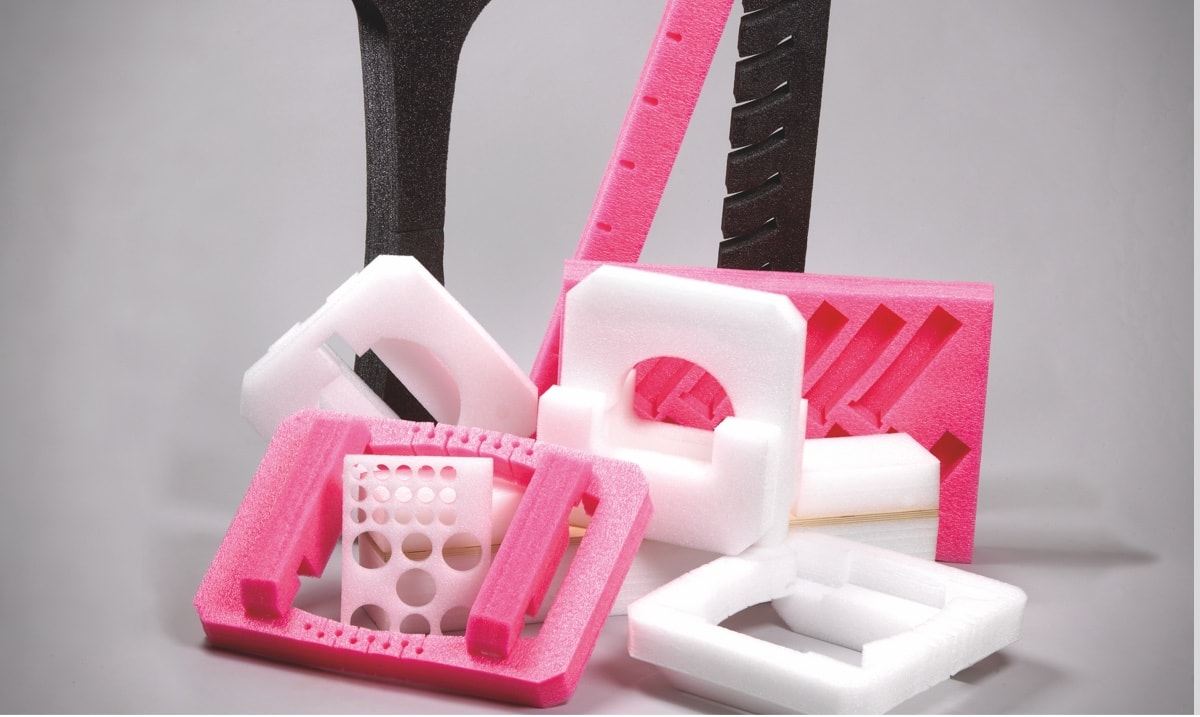
Cellular polyethylene is a closed-cell foam that combines low weight with low water absorption. Compared to softer cellular rubber, this material provides a more dimensionally stable insulation component, which can be an advantage when the component needs to lie flat, fill a specific space, or maintain its geometry during handling and installation.
The material can be processed into, for example, sheets, spacers, and custom-cut insulation components with holes or cutouts. This makes cellular polyethylene useful when the insulation needs to fit between other components and the dimensions must be reproducible from one component to the next.
Foam rubber when the insulation needs to conform to the substrate
Cell rubber is softer and more pliable. This makes it well-suited for use around pipes, bends, and other surfaces where a stiffer insulation material might leave gaps. The material can be compressed and conforms to minor variations in the surface.
This is particularly relevant when the insulation needs to continue around corners or around components with varying geometries. A seamless connection is important because even a small uninsulated area can have a significantly different surface temperature than the surrounding area.
The right thickness depends on more than just the available space
Choosing the thickest insulation that will fit is not always the right approach. The required thickness depends on the temperatures on both sides of the insulation, the material’s thermal conductivity, and the intended function of the insulation.
For example, if the insulation is intended to prevent condensation, the surface temperature must be kept above the dew point under the conditions in which the structure is used. In that case, the ambient temperature and humidity also become important factors. Read more about this under “moisture insulation” and “condensation insulation.”
If the main purpose is instead to limit heat loss or heat transfer, you can read more about our thermal insulation. If there are also requirements regarding the material’s behavior in the event of a fire, you can read more about our fire-rated insulation in accordance with UL94 and EN 13501-1.
Materials we use to manufacture
The Right Materials for the Right NeedsFrom Sheet to Finished Insulation Component
In many designs, the sheet material itself is not the final solution. The insulation may need to follow an outer contour, leave space for screws and bushings, or fit around other components. By machining cellular plastic and cellular rubber according to a drawing, the insulation can be delivered with these details already incorporated into its geometry.
Do you need help? Contact us at Cabseal, and we'll help you find the right material and design to meet your needs!