
Foil-faced foam insulation consists of a foam material with a foil layer on its surface. This makes it possible to combine the foam’s insulating and flexible properties with a surface that can provide functions beyond those of the foam itself. These include moisture-repellent, heat-reflective, or other types of protection.
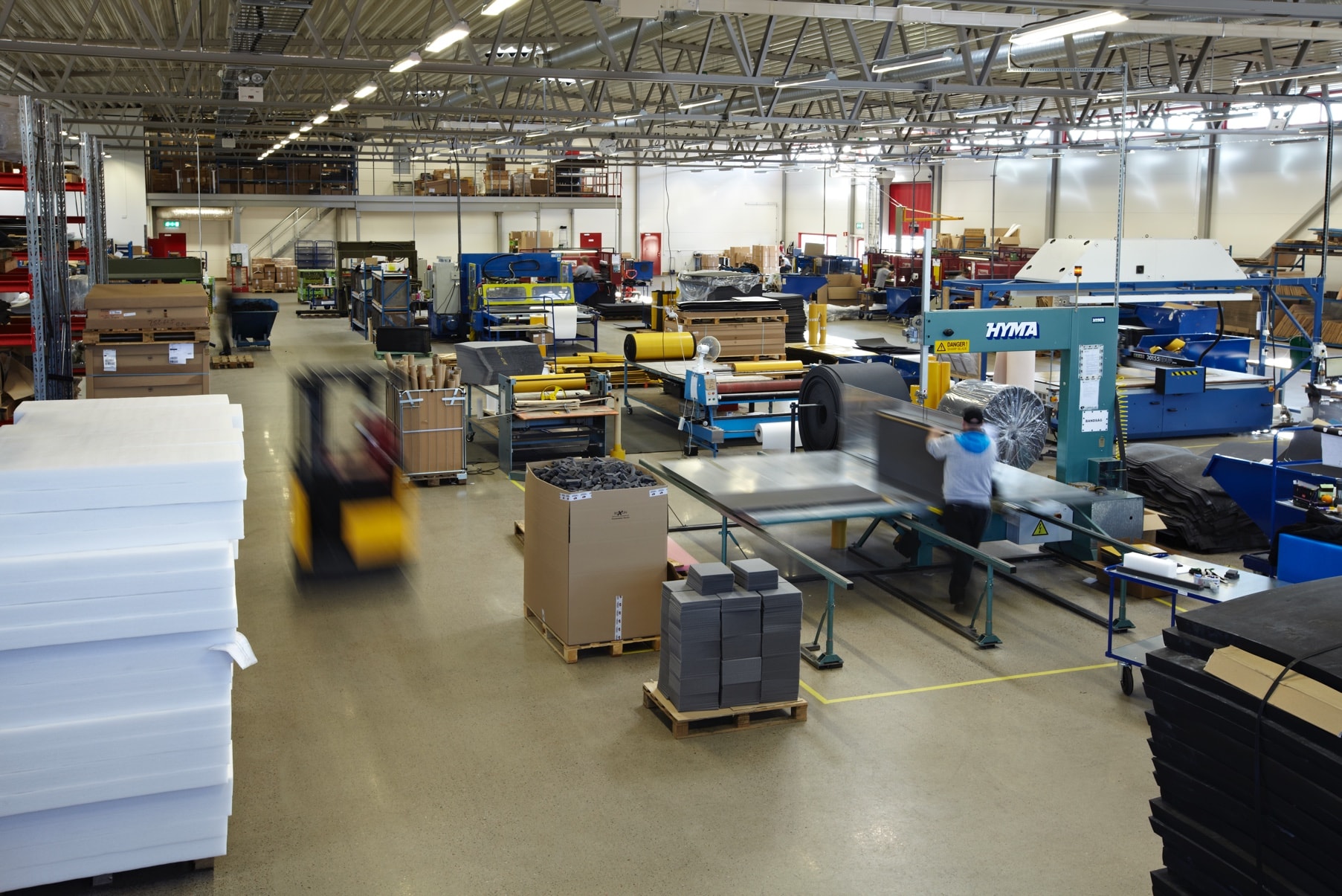
We manufacture laminated foam insulation made of polyester/ether foam. The material can be processed into finished components for, for example, machines, enclosures, and other technical structures where the insulation needs to conform to a specific geometry.
Choose Right from the StartThe foam and the foil serve different purposes
In foil-faced insulation, it is important to distinguish between the contributions of the two layers. The polyester/ether foam creates a lightweight, porous layer with insulating properties, while the foil forms a separate surface layer that acts as a barrier to the environment.
Depending on the type of foil used, the surface layer can, for example, make it easier to keep the insulation clean or provide the foam with a protective surface layer. If the foil has a reflective surface, it can also affect heat transfer by radiation, but the effect depends on how the insulation is constructed and installed.
Materials We Manufacture: Sound Absorbers and Acoustic Foam in
Location is crucialA reflective film needs the right conditions
A shiny foil is often associated with heat reflection, but the foil’s placement is crucial. For a low-emissivity surface to limit radiative heat transfer, it normally needs to face an air gap or an open space.
If the foil is in direct contact with the adjacent material, heat transfer occurs there primarily through contact and thermal conduction. When it comes to thermal insulation, therefore, the entire structure must be taken into account, since the properties of the foam, its thickness, the placement of the foil, and the installation method all collectively influence the result.
The foil side needs to face the right way
Since the foam and the film serve different functions, the orientation of the component must be taken into account as early as the design phase. This is particularly important for asymmetrical components, holes, and recesses, where a mirror-image component could result in the film side facing the wrong surface during installation.
The drawing should therefore clearly indicate which side is to be laminated. This ensures that the part can be machined with the correct geometry and delivered in the finish required by the design.
Processing without unnecessary steps during assembly
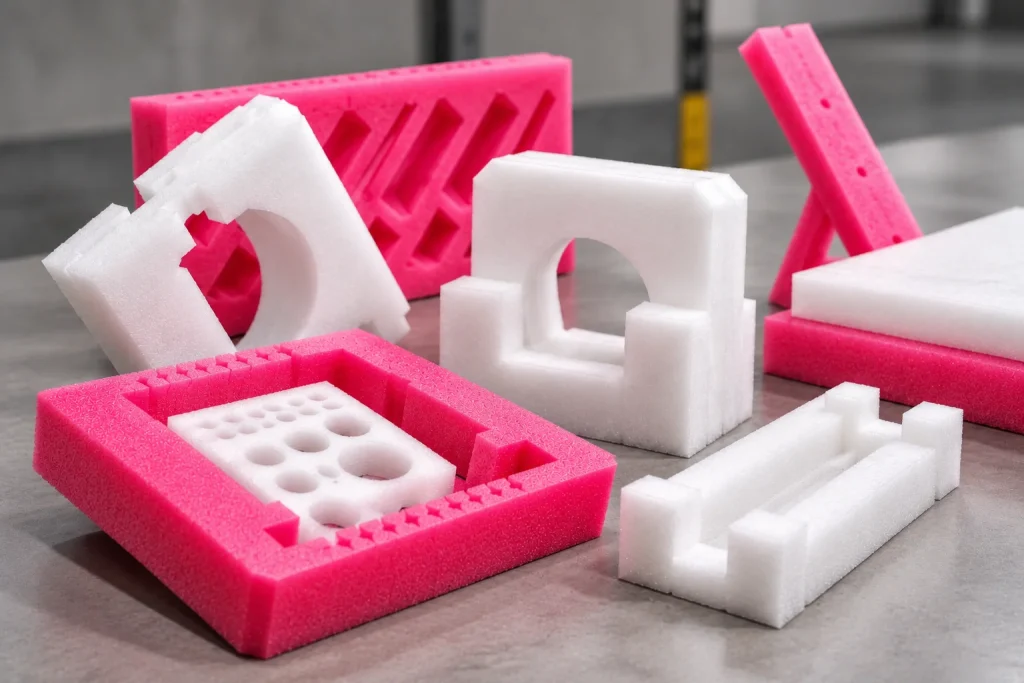
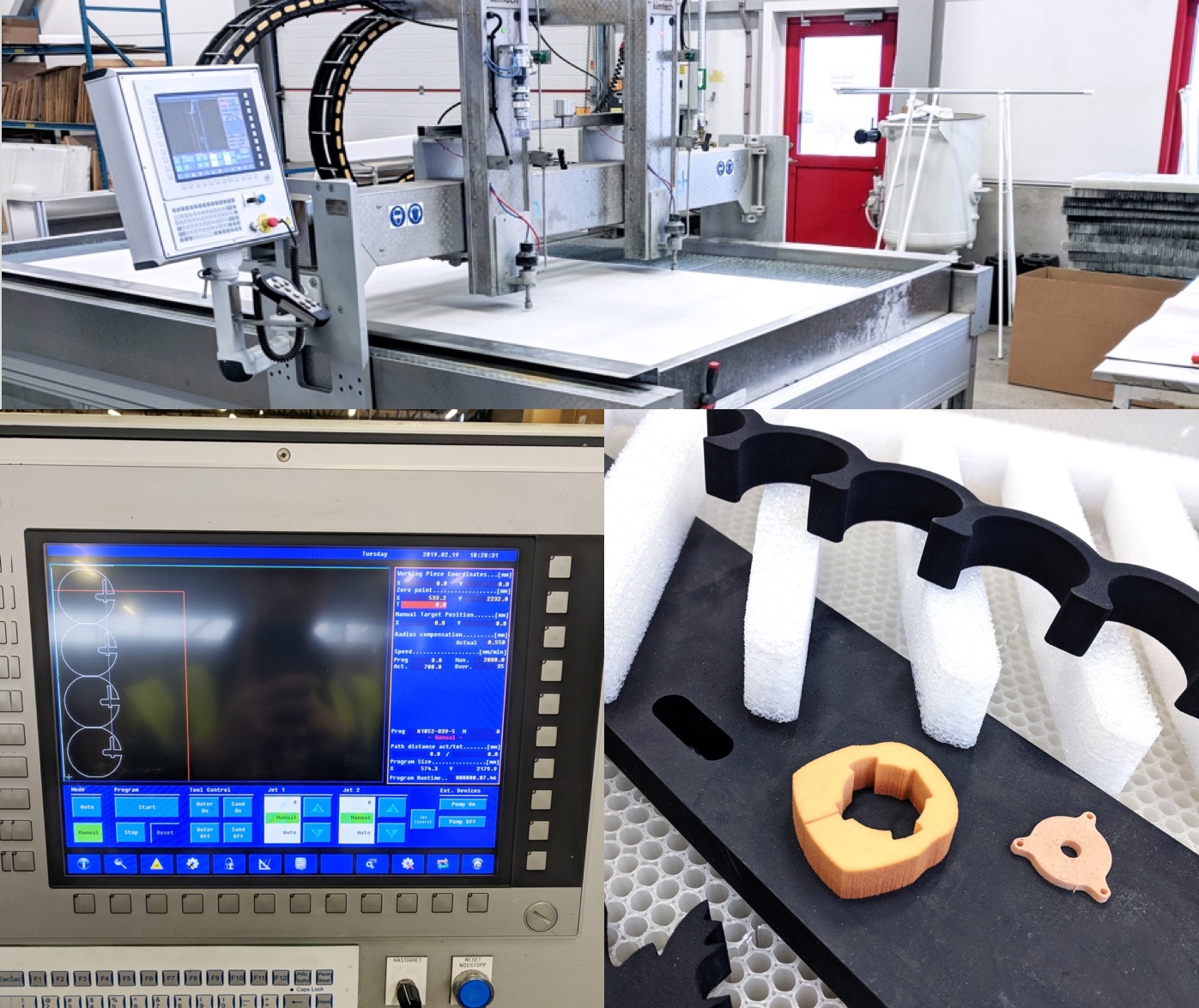
Laminated polyester/ether foam can be cut into components with custom outer contours and cutouts. This allows the insulation to be delivered in the correct format, rather than requiring the foil and foam to be cut or fitted separately during installation.
Do you have a component that requires both the foam’s functionality and a foil-coated surface layer? Contact us at Cabseal with a drawing or measurements, and we can review how the component should be constructed and processed.